
At a glance
- What it measures
- How well you use vision, the inner ear, and sensation from your feet to stay balanced
- How long
- About 30 minutes
- Preparation
- Comfortable clothing; no alcohol the day before
- How it feels
- Safe: a harness prevents falls while the floor or view moves
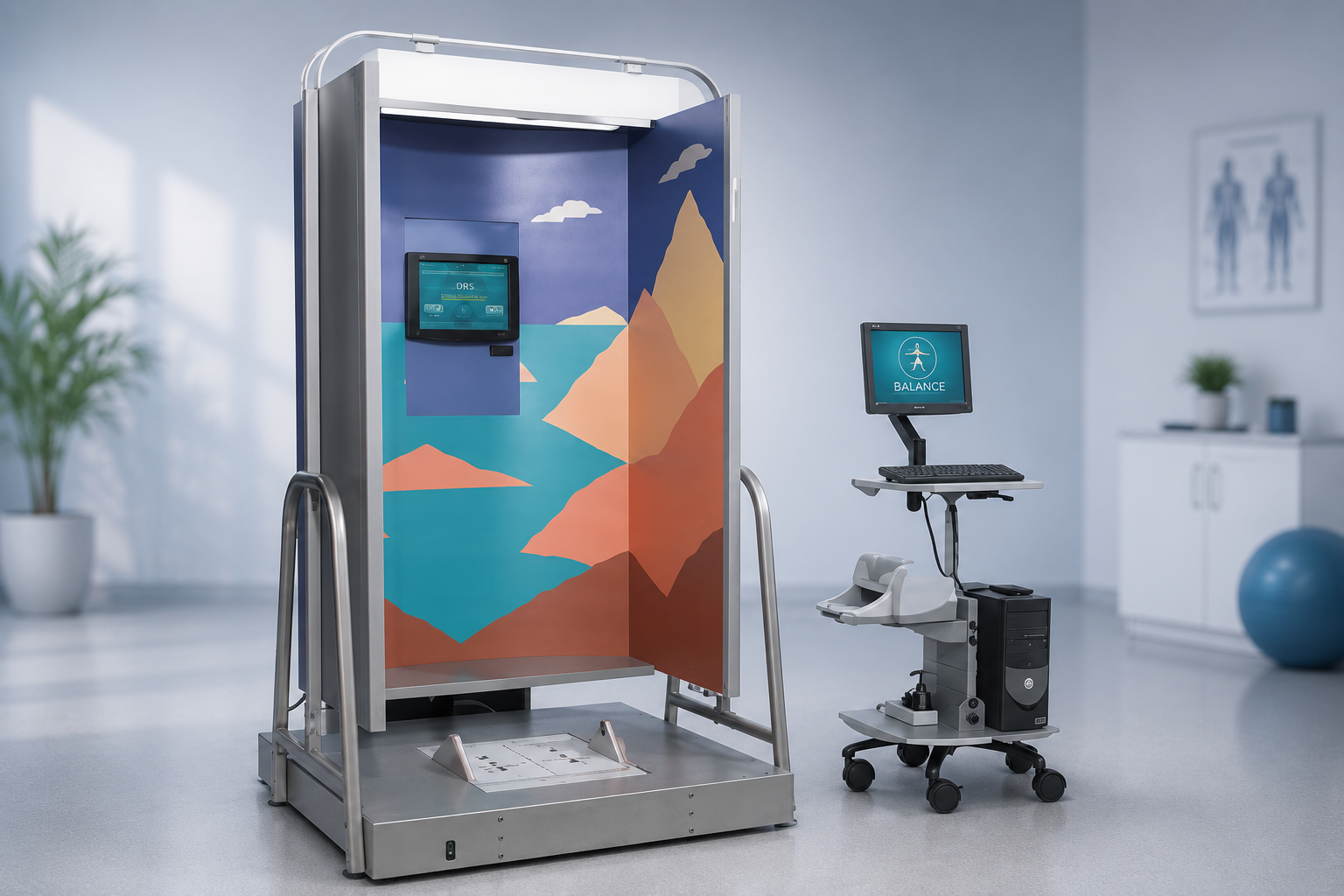
What CDP measures
Computerized Dynamic Posturography evaluates how a patient maintains balance under changing sensory conditions. The platform and visual surround can alter the reliability of body-sense and visual cues, helping identify whether a patient is over-relying on one system or struggling to integrate multiple balance inputs.
Why it is useful
CDP is especially helpful when symptoms include unsteadiness, falls, gait imbalance, visual dependence, or persistent dizziness after vestibular injury. Results can guide vestibular rehabilitation priorities and provide a baseline for tracking progress.
What to expect
- You wear a safety harness attached to an overhead support, so you can't fall.
- You stand on a platform whose sensors measure small shifts in your body sway.
- In a series of short trials, you stand still with your eyes open or closed while the floor or the visual surround may move slightly.
- In other trials the platform moves briefly to see how quickly and efficiently your body recovers.
How to prepare
- Wear loose, comfortable clothing and flat shoes. You may be asked to stand in socks.
- Avoid alcohol for 24 hours before the test.
- If your clinician agrees, avoid medicines that cause drowsiness or suppress dizziness for 24 to 48 hours beforehand.
- Tell the team if you can't stand without support for a few minutes, or have a recent ankle, knee, hip, or back injury.
These are general guidelines. When your test is scheduled, our office will confirm the instructions for your visit. Never stop a prescribed medication without first asking the clinician who prescribed it.
After the test
No recovery time is needed. The results show which balance senses you rely on and which are weak, and they are often used to plan and track vestibular rehabilitation.
Related conditions
Further reading
- Balance problemsMedlinePlus
- Falls and fall preventionNational Institute on Aging