
At a glance
- What it measures
- How well nerves carry signals and how muscles respond
- How long
- About 30 to 60 minutes, depending on how many limbs are tested
- Preparation
- Clean skin with no lotion; tell us about blood thinners or a pacemaker
- How it feels
- Brief tingling pulses and small needle pricks; mild soreness can follow
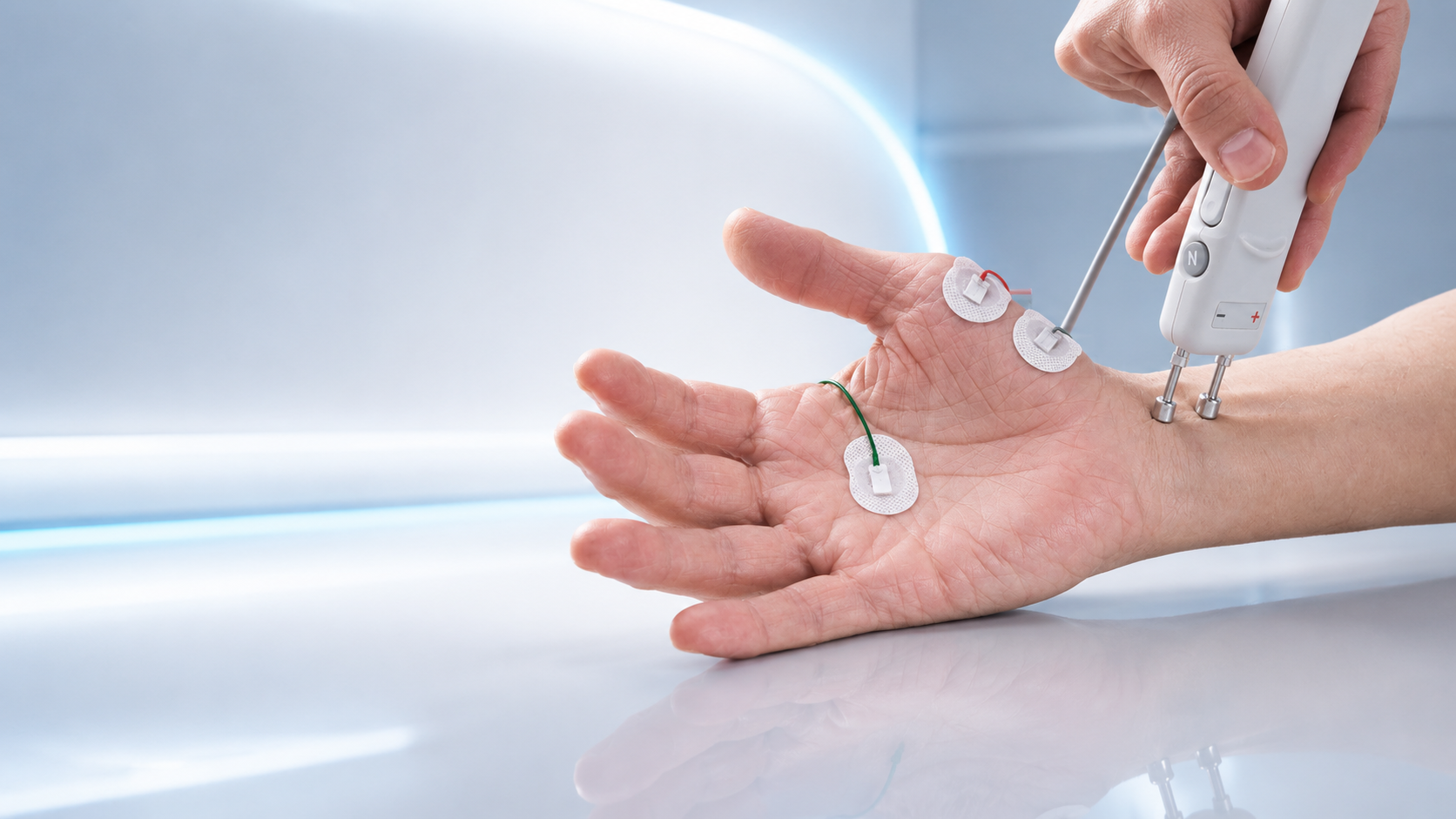
What EMG/NCV evaluates
EMG and nerve conduction studies assess how well peripheral nerves and muscles are working. They can help identify neuropathy, nerve compression, radiculopathy, muscle disease, or other neuromuscular causes of weakness, numbness, pain, or imbalance.
Why it may be recommended
Balance problems can come from the vestibular system, the nervous system, the feet and legs, or several systems at once. EMG/NCV testing helps clarify whether peripheral nerve or muscle function is contributing to gait instability or sensory symptoms.
What to expect
- Nerve conduction study: small sensors are taped to your skin and a brief electrical pulse stimulates the nerve. It feels like a quick tap or tingle.
- Electromyography: a very thin needle electrode is placed in selected muscles to record their activity at rest and when you tighten them.
- Both sides may be tested so they can be compared.
How to prepare
- Shower on the day of the test, and don't apply lotion, cream, or oil to your arms or legs.
- Wear loose clothing that lets your arms or legs be uncovered easily.
- Tell the team if you take blood thinners, have a pacemaker or implanted defibrillator, have lymphedema, or have a bleeding disorder.
- Keep taking your usual medicines unless you are told otherwise.
- Keep your hands and feet warm on the way in. Cold skin slows nerve signals and can affect the results.
These are general guidelines. When your test is scheduled, our office will confirm the instructions for your visit. Never stop a prescribed medication without first asking the clinician who prescribed it.
After the test
You can return to normal activities right away. Muscles may feel a little sore, and small bruises can appear where the needle was placed; both fade within a day or two.
Related conditions
Further reading
- ElectromyographyMedlinePlus
- Nerve conduction velocityMedlinePlus