
At a glance
- What it measures
- The brain's electrical activity, looking for patterns linked to seizures or other spells
- How long
- About 30 to 60 minutes for a routine recording
- Preparation
- Clean, dry hair with no oils, gels, or sprays; usual medicines unless told otherwise
- How it feels
- Painless; you rest quietly while it records
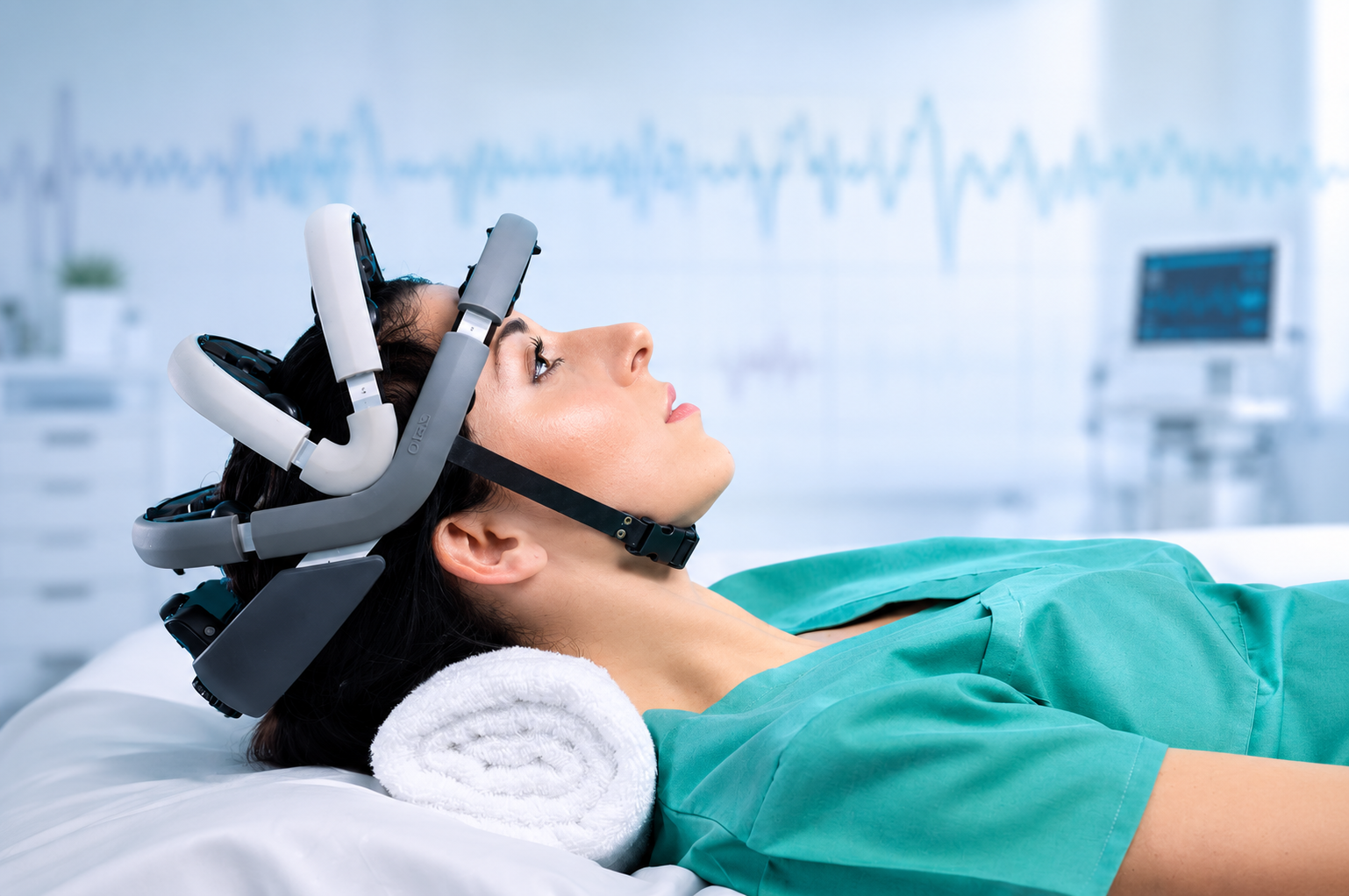
What EEG evaluates
Electroencephalogram testing records electrical activity from the scalp. It can help evaluate episodic neurologic symptoms such as spells, altered awareness, unexplained events, or patterns that may suggest seizure activity.
How it fits into dizziness care
Most dizziness is not caused by seizures, but some patient histories include episodes that overlap with neurologic events. EEG results are interpreted alongside the neurologic examination, symptom timing, medication history, and any vestibular or imaging findings.
What to expect
- Small sensors are placed on your scalp, usually held by a headset or cap.
- You relax, often with your eyes closed, while brain activity is recorded.
- You may be asked to breathe deeply for a few minutes and to look at a flashing light, which can bring out patterns that don't appear at rest.
- If you feel drowsy, it's fine to fall asleep. Sleep can make some patterns easier to see.
How to prepare
- Wash your hair the night before or the morning of the test, and leave out conditioner, oils, gels, and sprays.
- Avoid caffeine for 8 hours before the test.
- Keep taking your usual medicines, including seizure medicines, unless you are told otherwise.
- If you're asked to come in sleep-deprived, follow those instructions exactly and have someone drive you.
- Bring a list of your medicines and a description of your spells. A video of a spell recorded by a family member can be very helpful.
These are general guidelines. When your test is scheduled, our office will confirm the instructions for your visit. Never stop a prescribed medication without first asking the clinician who prescribed it.
After the test
You can go back to your usual activities right away, unless you were sleep-deprived. A physician reviews the full recording, and the results are discussed with you along with your history and examination.
Related conditions
Further reading
- EEGMedlinePlus
- Epilepsy and seizuresNINDS (NIH)