
At a glance
- What it does
- Moves the eyes opposite to the head so vision stays steady
- Why it matters
- A weak reflex causes blurred or bouncing vision with head movement
- How it's tested
- Head impulse testing, rotational chair testing, and VNG
- Treatment
- Gaze-stabilization exercises in vestibular rehabilitation
Overview
Welcome to our neurology clinic's informational guide on the Vestibulo-Ocular Reflex (VOR). This essential reflex plays a critical role in maintaining stable vision during head movements and is a vital part of our assessment process for patients experiencing dizziness.
The Vestibulo-Ocular Reflex (VOR) is a reflexive eye movement that stabilizes images on the retina during head movements. This reflex ensures that when your head moves in one direction, your eyes move in the opposite direction at the same speed, allowing you to maintain a steady gaze on a fixed point.
Importance of VOR
- Stabilizes Vision: The primary function of VOR is to stabilize vision during rapid head movements.
- Enhances Balance: VOR contributes to overall balance and spatial orientation by providing consistent visual input.
How VOR Works
The VOR involves a complex interaction between the vestibular system (located in the inner ear) and the ocular muscles. When the head moves, sensors in the inner ear detect this motion and send signals to the brain, which then directs the eye muscles to move the eye in the opposite direction of head movement.
Dr. Purcell’s Use of VOR and Nystagmus in Patient Assessments
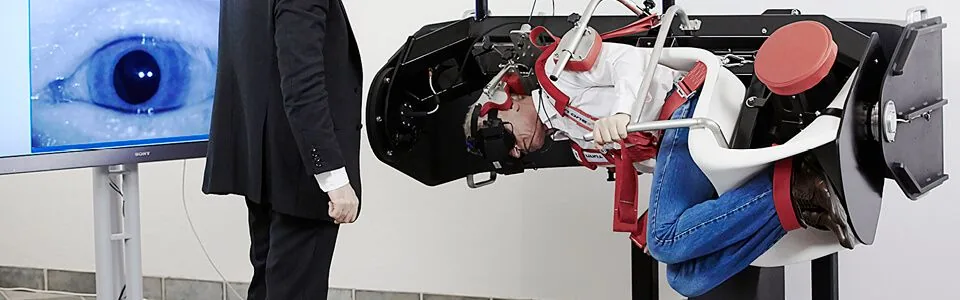
Dr. Ian Purcell utilizes VOR and observation of Nystagmus in his clinic to evaluate patients experiencing dizziness. This assessment helps in diagnosing various vestibular and balance disorders, ensuring accurate and effective treatment plans.
Abnormalities Related to VOR
- Benign Paroxysmal Positional Vertigo (BPPV): Causes brief episodes of dizziness related to changes in head position.
- Vestibular Neuritis: An inner ear infection leading to inflammation and affecting the VOR.
- Meniere's Disease: Characterized by episodes of vertigo, tinnitus, and hearing loss, impacting the VOR.\
Many other pathologies include: Acoustic Schwannomas, Intracranial Masses, Trauma, TBI, stroke, Multiple Sclerosis (MS), Parkinson's Disease (PD), and many others.
Diagnosis
To assess VOR functionality and diagnose related disorders, Dr. Purcell employs several methods:
- Clinical Examination: Includes head impulse tests and observing eye movements.
- Videonystagmography (VNG): A test that records eye movements to evaluate VOR.
- Rotational Chair Testing: Assesses how well the VOR compensates for head movements.
Treatment
Treatment options for VOR-related disorders vary based on the underlying cause:
- Medications: To treat infections or reduce vertigo symptoms.
- Vestibular Rehabilitation Therapy (VRT): Exercises designed to improve VOR function and overall balance.
- Canalith Repositioning Maneuvers: Techniques to treat BPPV by moving displaced crystals in the inner ear.
Testing that can help
Testing is chosen from your history and examination. These are the tests most often used here.
Related topics
When to seek urgent care
Call 911 or go to the nearest emergency department if dizziness or imbalance starts suddenly together with any of the following, since these can be signs of a stroke or another emergency:
- Weakness or numbness of the face, arm, or leg, especially on one side
- Trouble speaking or understanding speech
- Double vision or sudden loss of vision
- A sudden, severe headache
- Inability to walk or stand
- Chest pain, fainting, or a seizure
Further reading
- The human balance systemVestibular Disorders Association
- Balance disordersNIDCD (NIH)
This article is for general education and does not replace a medical evaluation. Testing and treatment are chosen for each patient after a full history and examination.