
At a glance
- Symptoms
- Involuntary eye movement, jumping or blurred vision, dizziness
- Common causes
- Inner ear disorders such as BPPV, brain conditions, medications, or present from birth
- How it's diagnosed
- Video recording of the eyes with goggles or videonystagmography (VNG)
- Treatment
- Treating the cause, such as repositioning maneuvers for BPPV
Overview
Nystagmus is defined as any rhythmic, involuntary oscillation of the eyes. It can be physiological or pathological, generally maintaining a forward gaze due to balanced input from both left and right vestibular systems.
Types of Nystagmus
- Peripheral Nystagmus: Often linked to inner ear issues such as vestibular neuritis or benign paroxysmal positional vertigo (BPPV).
- Central Nystagmus: Arises from brain or neural pathway issues, more complex in diagnosis and management.
- Positional Nystagmus: Triggered by head position changes, typically indicating BPPV.
Causes and risk factors
- Inner Ear Disorders: Primary culprits of peripheral nystagmus, including BPPV and labyrinthitis.
- Neurological Conditions: Leading to central nystagmus, such as multiple sclerosis or brainstem lesions.
- Medications: Can induce nystagmus as a side effect.
Diagnosis
Our clinic uses a thorough approach, including:
- Detailed Patient History: Understanding onset, duration, and triggers.
- Physical and Neurological Examination: Identifying nystagmus type and underlying conditions.
- Specialized Tests: Videonystagmography (VNG) and MRI provide a comprehensive view of the vestibular and neurological status.
Treatment
Treatment is highly individualized, from medications managing symptoms or underlying conditions to vestibular rehabilitation improving balance and surgical options for resistant cases.
Comprehensive Nystagmus Patterns
- Jerk Nystagmus: Asymmetric oscillation with a slow pathological phase and a rapid corrective phase.
- Pendular Nystagmus: Oscillations of equal amplitude in any direction, typically due to a loss of inhibitory feedback or increased feedback delay, resulting in spontaneous oscillation.
- Gaze-Evoked Nystagmus: Occurs when the eyes move to an extreme position, often due to an abnormality in gaze-holding systems or muscle fatigue.
- Periodic Alternating Nystagmus (PAN): A horizontal jerk nystagmus that periodically changes direction, typically due to neurological issues or medications.
- Rebound Nystagmus: A type of gaze-paretic nystagmus where the jerk nystagmus gradually decreases in amplitude when the eyes are held in an eccentric position for long.
Special Nystagmus Types
- Seesaw Nystagmus: Vertical disconjugate nystagmus with alternating elevation and depression of each eye.
- Convergence-Retraction Nystagmus: Occurs with attempted upgaze, causing the eyeball to retract and converge.
- Convergence Nystagmus: A pendular type induced by eye convergence, often accompanied by synchronous muscle contractions, characteristic of certain neurological conditions.
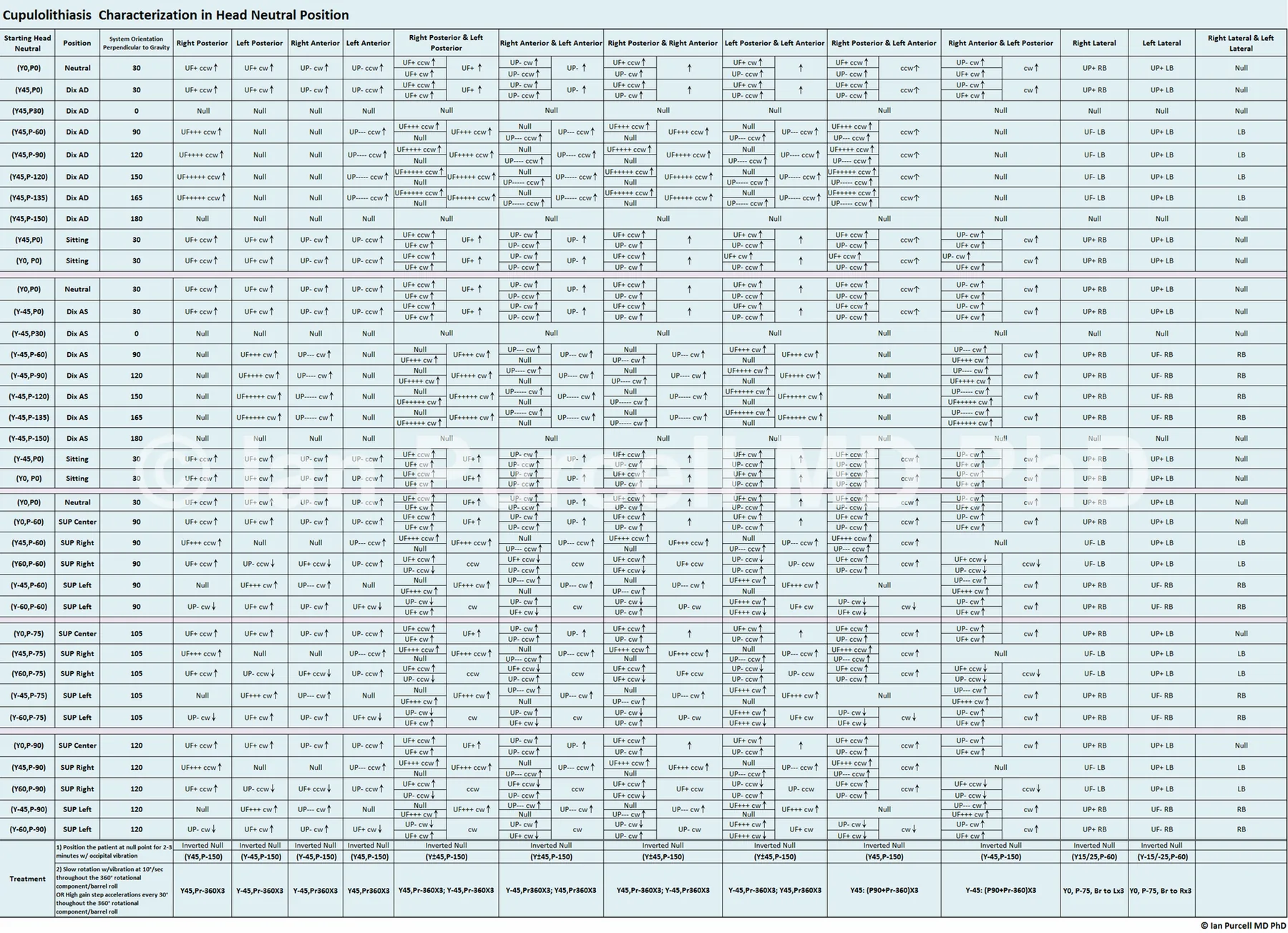
Revolutionary Insights by Dr. Ian Purcell
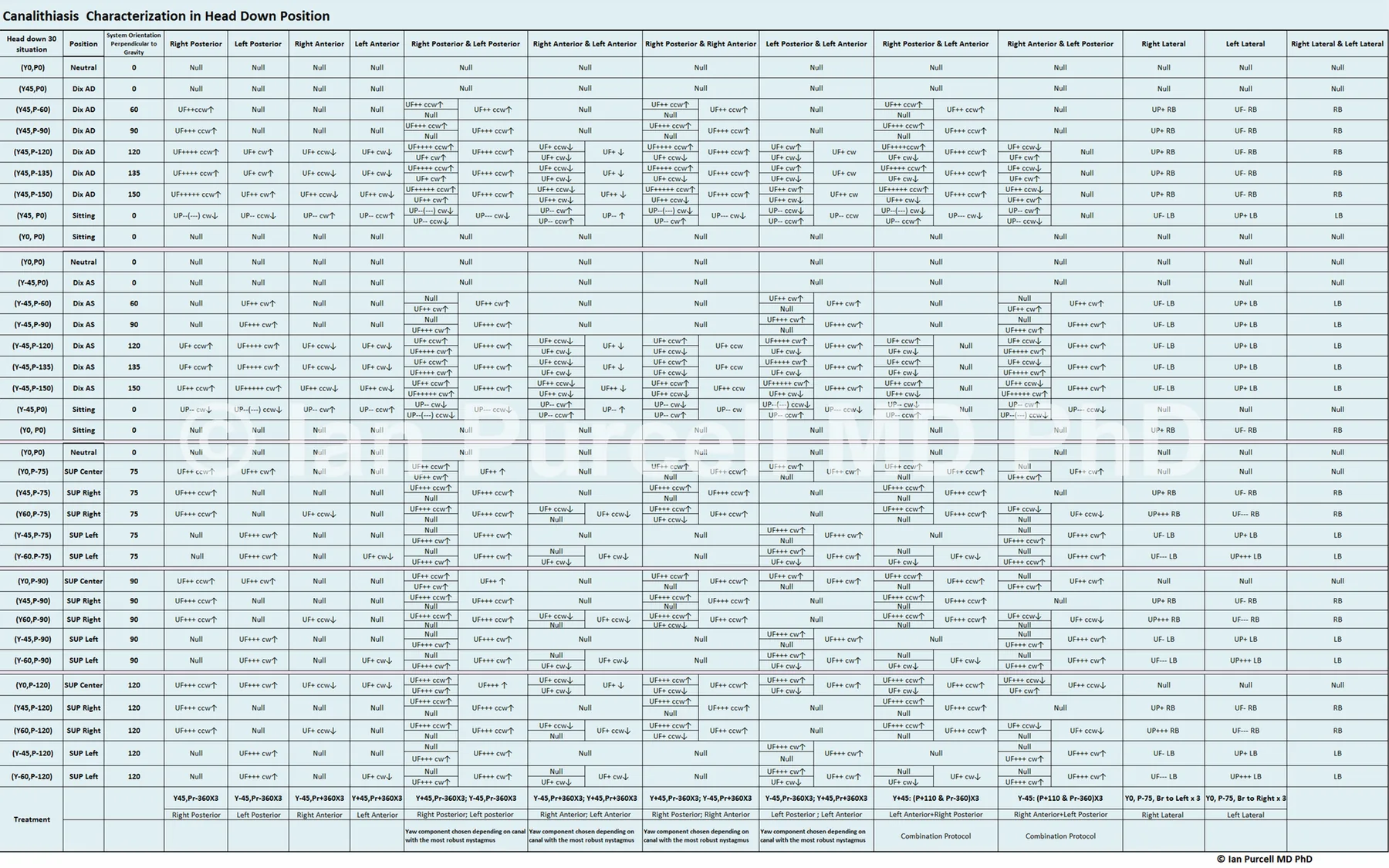
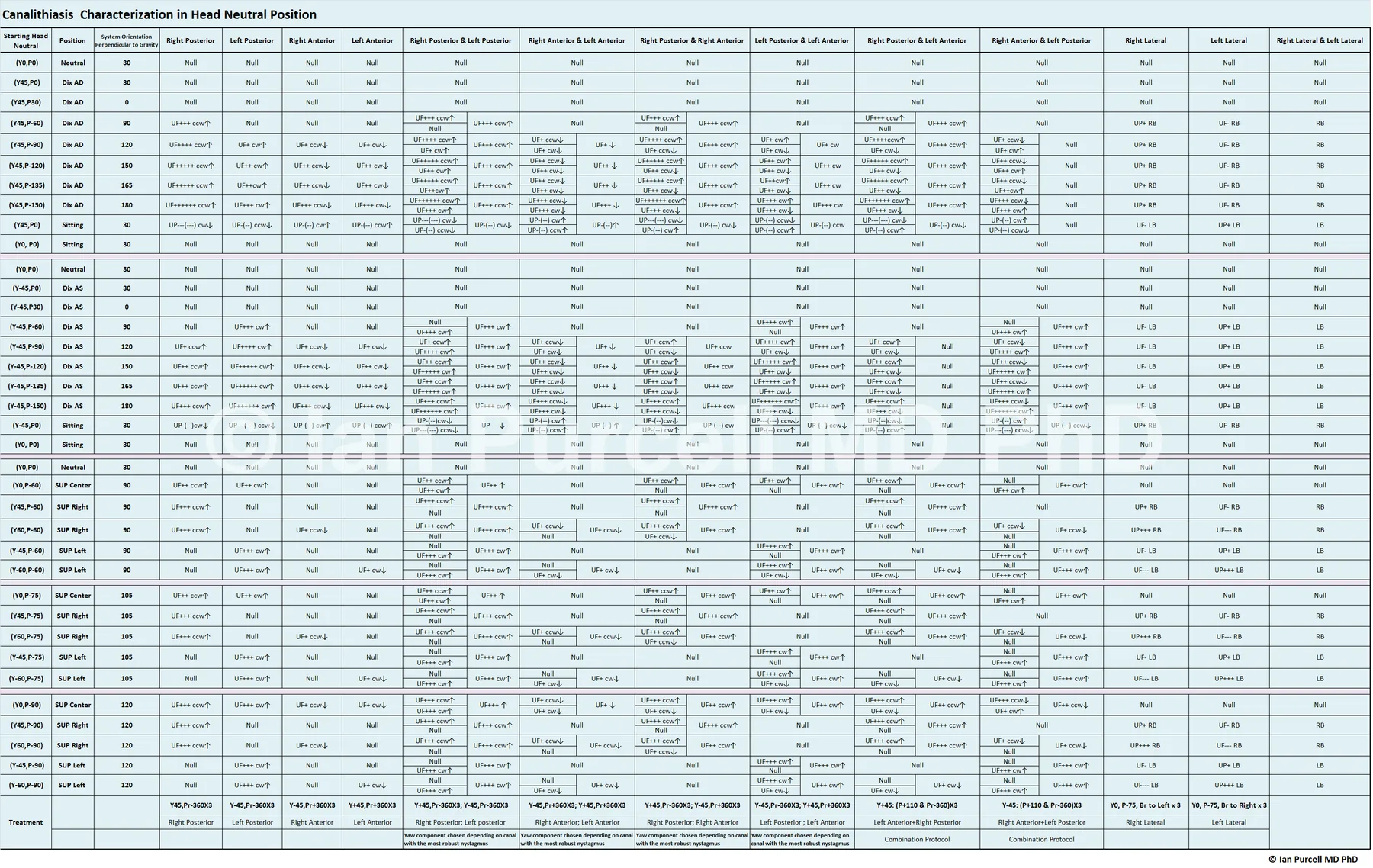
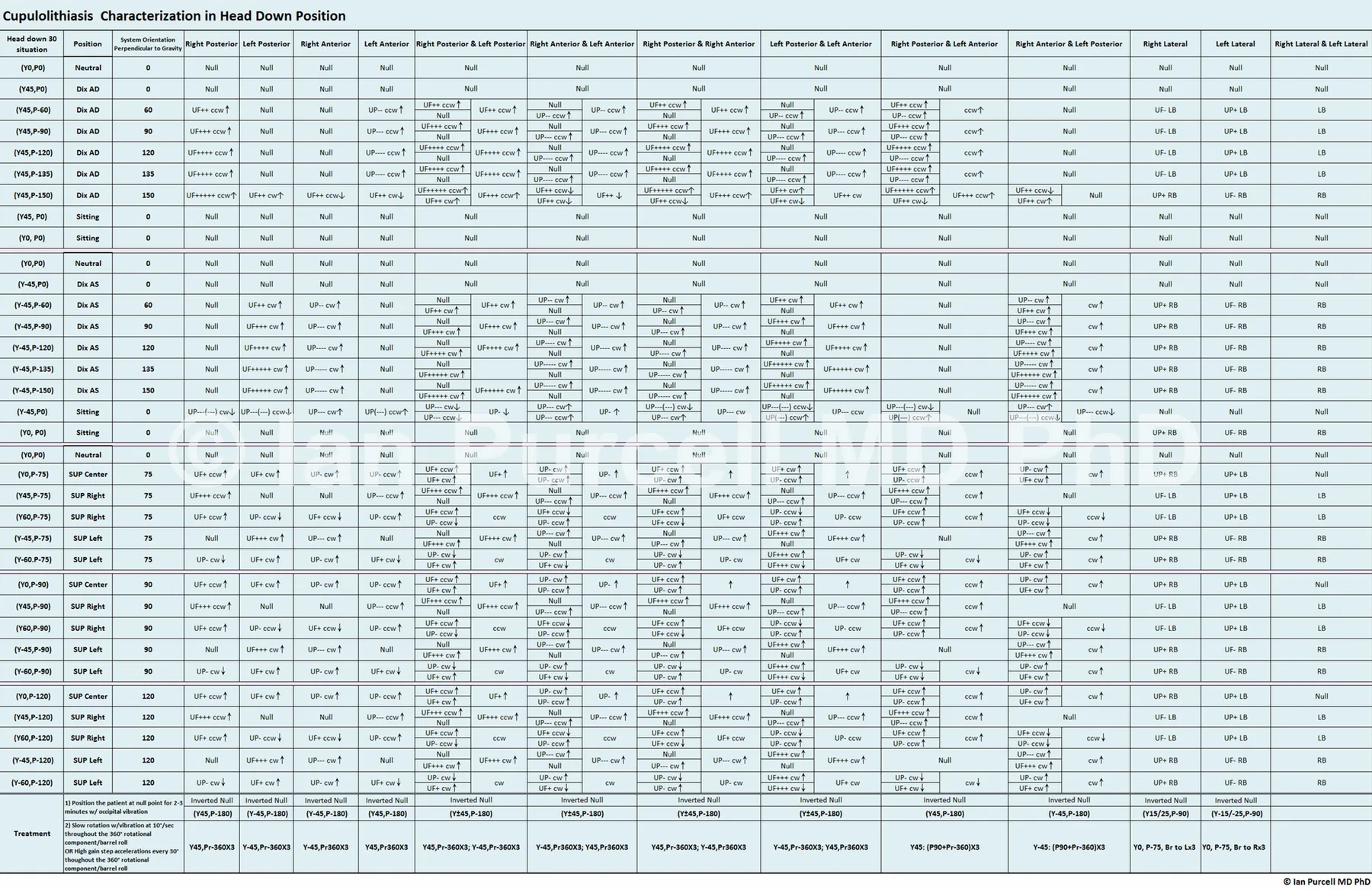
Dr. Purcell has meticulously identified various nystagmus patterns related to dislodged otoliths in the inner ear, significantly advancing diagnosis and treatment of BPPV. The key to Dr. Purcell’s approach is precision in diagnostic techniques, crucial for accurate maneuvers like the Dix-Hallpike and Epley, using advanced tools like canalith repositioning chairs.
| Abbreviation | Meaning |
|---|---|
| Y | Yaw |
| P | Pitch |
| UF | Utricular Fugal |
| UP | Utricular Pedal |
| + | Excitatory response |
| - | Inhibitory response |
| CW | Clockwise nystagmus |
| CCW | Counterclockwise nystagmus |
| Up arrow | Upbeat nystagmus |
| Down arrow | Downbeat nystagmus |
| RB | Right beat |
| LB | Left beat |
| Br | Barrel roll |
| Dix | Dix- Hallpike |
| AD | Right ear |
| AS | Left ear |
| SUP | Supine position |
Nystagmus characterization charts
Testing that can help
Testing is chosen from your history and examination. These are the tests most often used here.
Related topics
When to seek urgent care
Call 911 or go to the nearest emergency department if dizziness or imbalance starts suddenly together with any of the following, since these can be signs of a stroke or another emergency:
- Weakness or numbness of the face, arm, or leg, especially on one side
- Trouble speaking or understanding speech
- Double vision or sudden loss of vision
- A sudden, severe headache
- Inability to walk or stand
- Chest pain, fainting, or a seizure
Further reading
- NystagmusMedlinePlus
- Balance disordersNIDCD (NIH)
This article is for general education and does not replace a medical evaluation. Testing and treatment are chosen for each patient after a full history and examination.