
At a glance
- What it does
- Finds and treats positional vertigo (BPPV), especially when bedside maneuvers aren't enough
- How long
- About 30 to 45 minutes
- Preparation
- Light meal only, no eye makeup, and a ride home if you tend to feel unsteady
- How it feels
- Brief vertigo in some positions, a sign the crystals are moving
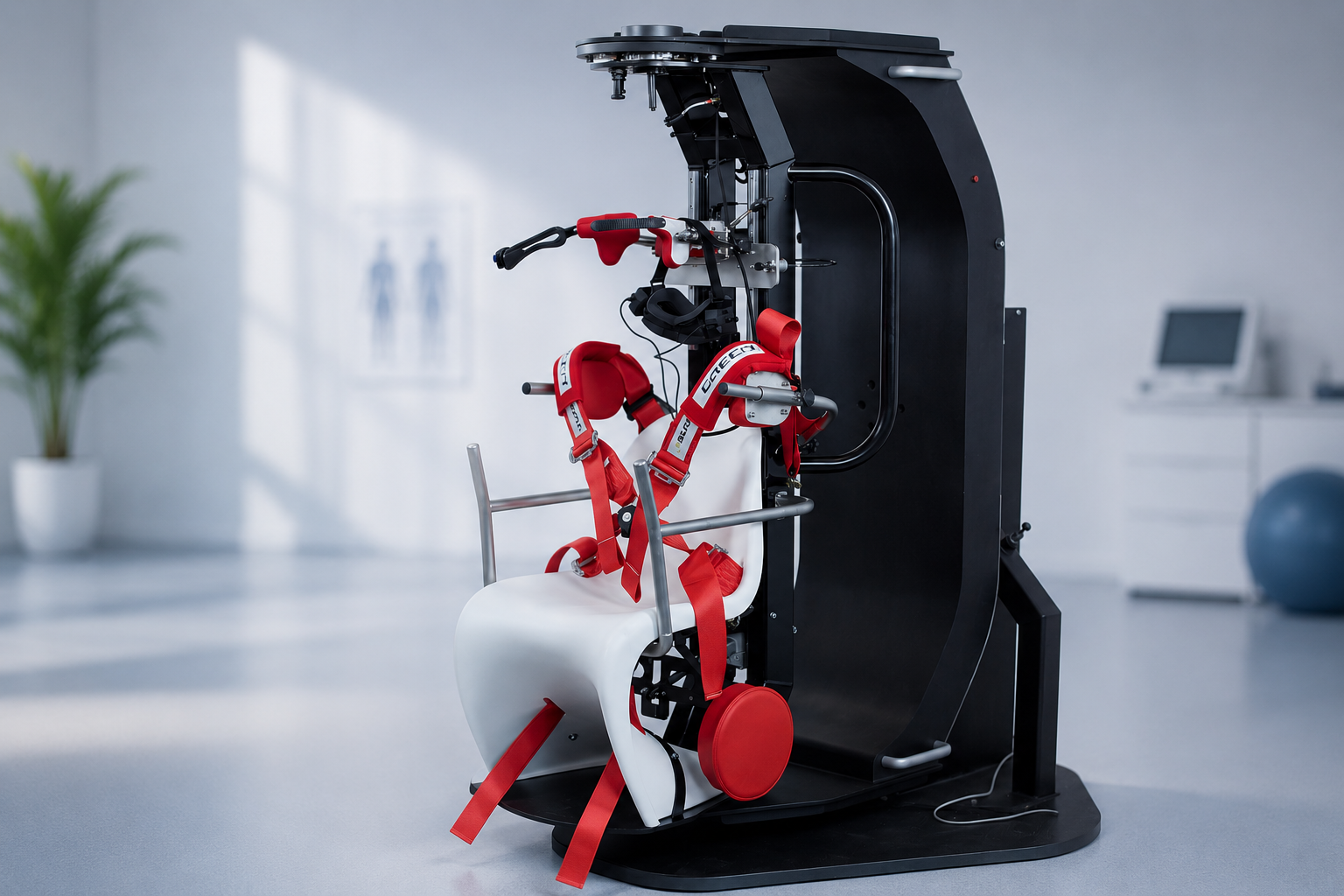
What the TRV Chair is used for
The TRV Chair supports precise evaluation and treatment of positional vertigo by allowing controlled movement through multiple axes. It can help when standard maneuvers are not enough or when the canal involvement is unclear.
Why it matters
Complex BPPV can involve unusual canal patterns, intense symptoms, or limited mobility that makes bedside repositioning difficult. Chair-based testing and treatment can improve precision and patient safety.
What to expect
- You sit in the chair and are secured with a harness and supports.
- Video goggles record your eye movements throughout.
- The clinician turns the chair by hand through set positions, which lets each canal be tested precisely without you having to move your neck or lie down on a table.
- Once the affected canal is identified, the chair is used to carry out the matching repositioning maneuver.
How to prepare
- Eat only a light meal in the few hours before your visit.
- Don't wear eye makeup. Mascara and eyeliner interfere with the video goggles.
- If your clinician agrees, avoid anti-dizziness and anti-nausea medicines, such as meclizine, for 48 hours beforehand. They can hide the eye movements the test looks for.
- Tell the team about neck or back problems, recent surgery, heart conditions, or anything that limits how you can be positioned.
- Wear comfortable clothing, and consider arranging a ride home in case you feel off-balance afterward.
These are general guidelines. When your test is scheduled, our office will confirm the instructions for your visit. Never stop a prescribed medication without first asking the clinician who prescribed it.
After the test
Mild unsteadiness or queasiness can last for a few hours and occasionally a day or two. Your clinician will tell you whether any precautions or home exercises are needed and when to follow up. Some patients need more than one session, especially when more than one canal is involved.
Related conditions
Further reading
- Benign positional vertigoMedlinePlus
- Benign paroxysmal positional vertigo (BPPV)Vestibular Disorders Association