
At a glance
- Symptoms
- Spinning, lightheadedness, unsteadiness, or a floating feeling
- Common causes
- Inner ear disorders, migraine, blood pressure changes, medications
- How it's diagnosed
- Detailed history, examination, and targeted vestibular testing
- Treatment
- Depends on the cause: maneuvers, medication, or rehabilitation
Overview
Welcome to our neurology clinic's informational guide on dizziness. As a condition that affects many, understanding the different types and potential causes is crucial for effective management and treatment.
Dizziness is an umbrella term that describes various sensations such as feeling faint, woozy, weak, or unsteady. Dizziness that creates the false sense that you or your surroundings are spinning or moving is called vertigo.
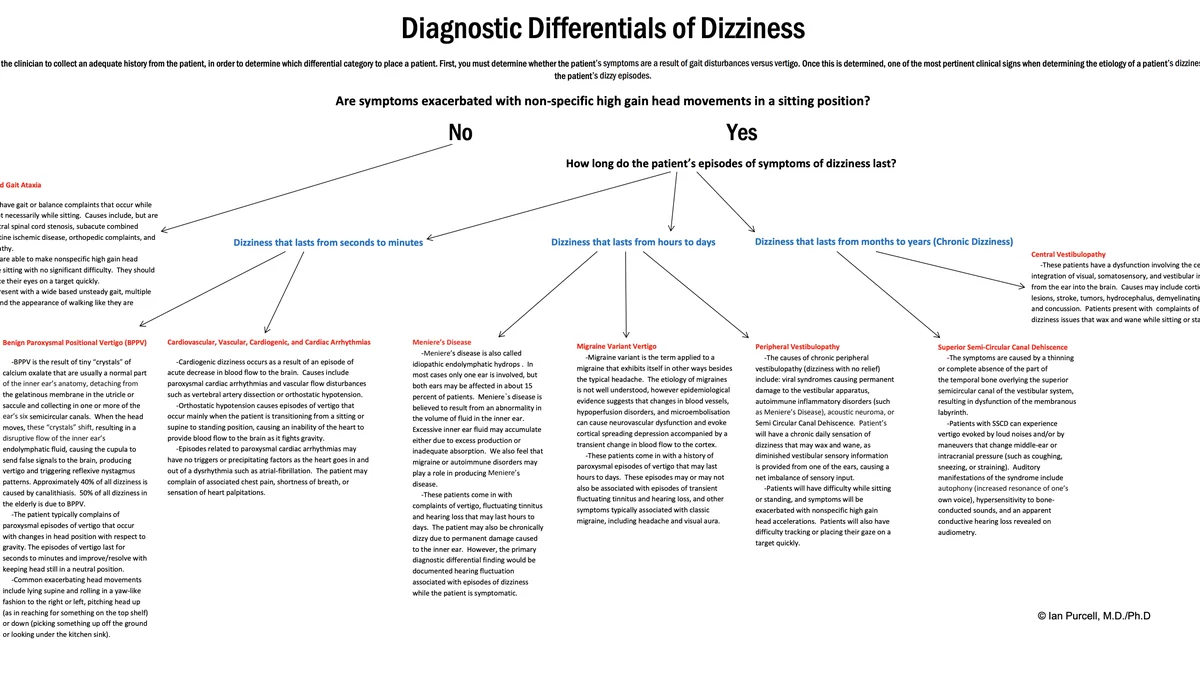
Types of Dizziness
- Vertigo: Characterized by a sensation of spinning or moving. Causes include inner ear disorders, Meniere's disease, and benign paroxysmal positional vertigo (BPPV).
- Disequilibrium: A sense of imbalance or unsteadiness, often without spinning. It can be due to conditions affecting the inner ear, brain, sensory nerve pathways, or muscles.
- Presyncope (Near-fainting): The feeling of lightheadedness or weakness that may lead to fainting, often cardiovascular in origin.
- Lightheadedness: A vague, floating sensation possibly related to psychological factors or dehydration.
Causes and risk factors
- Inner Ear Issues: Many cases of dizziness are caused by problems within the inner ear, which plays a crucial role in maintaining balance.
- Neurological Disorders: Conditions like Parkinson's disease, multiple sclerosis, or migraines can lead to dizziness.
- Cardiovascular Conditions: Blood circulation issues such as low blood pressure, arrhythmias, or carotid artery disease can cause dizziness.
- Medications: Some medications can have side effects that include dizziness or balance problems.
- Anxiety or Stress: Psychological factors can contribute to sensations of dizziness or lightheadedness.
Diagnosis
Our clinic employs a comprehensive approach to diagnose the cause of dizziness, which may include:
- Patient History: Understanding the specific characteristics of your dizziness, triggers, duration, and associated symptoms.
- Physical Examination: Focusing on the neurological and vestibular systems.
- Diagnostic Tests: Such as blood tests, hearing examinations, balance tests, and imaging studies to pinpoint the underlying cause.
Treatment
Treatment strategies are tailored to the underlying cause of dizziness and may include:
- Medication: To address specific causes such as inner ear infections, Meniere's disease, or migraines.
- Physical Therapy: Vestibular rehabilitation is particularly effective for certain types of balance disorders.
- Lifestyle Modifications: Including hydration, diet changes, and activity adjustments to manage symptoms.
- Surgery: In rare cases, surgical intervention may be necessary to treat underlying issues causing dizziness.
Testing that can help
Testing is chosen from your history and examination. These are the tests most often used here.
Related topics
When to seek urgent care
Call 911 or go to the nearest emergency department if dizziness or imbalance starts suddenly together with any of the following, since these can be signs of a stroke or another emergency:
- Weakness or numbness of the face, arm, or leg, especially on one side
- Trouble speaking or understanding speech
- Double vision or sudden loss of vision
- A sudden, severe headache
- Inability to walk or stand
- Chest pain, fainting, or a seizure
Further reading
- Dizziness and vertigoMedlinePlus
- Balance disordersNIDCD (NIH)
This article is for general education and does not replace a medical evaluation. Testing and treatment are chosen for each patient after a full history and examination.