
At a glance
- Symptoms
- Positional vertigo that lasts as long as the head stays in position
- Common causes
- Crystal debris stuck to the cupula of a semicircular canal
- How it's diagnosed
- Positional testing with video goggles to record eye movements
- Treatment
- Maneuvers that free the debris, then canal-specific repositioning
Overview
Cupulolithiasis is a type of benign paroxysmal positional vertigo (BPPV), which is one of the most common causes of vertigo. It causes brief episodes of mild to intense dizziness, typically triggered by specific changes in the position of your head.
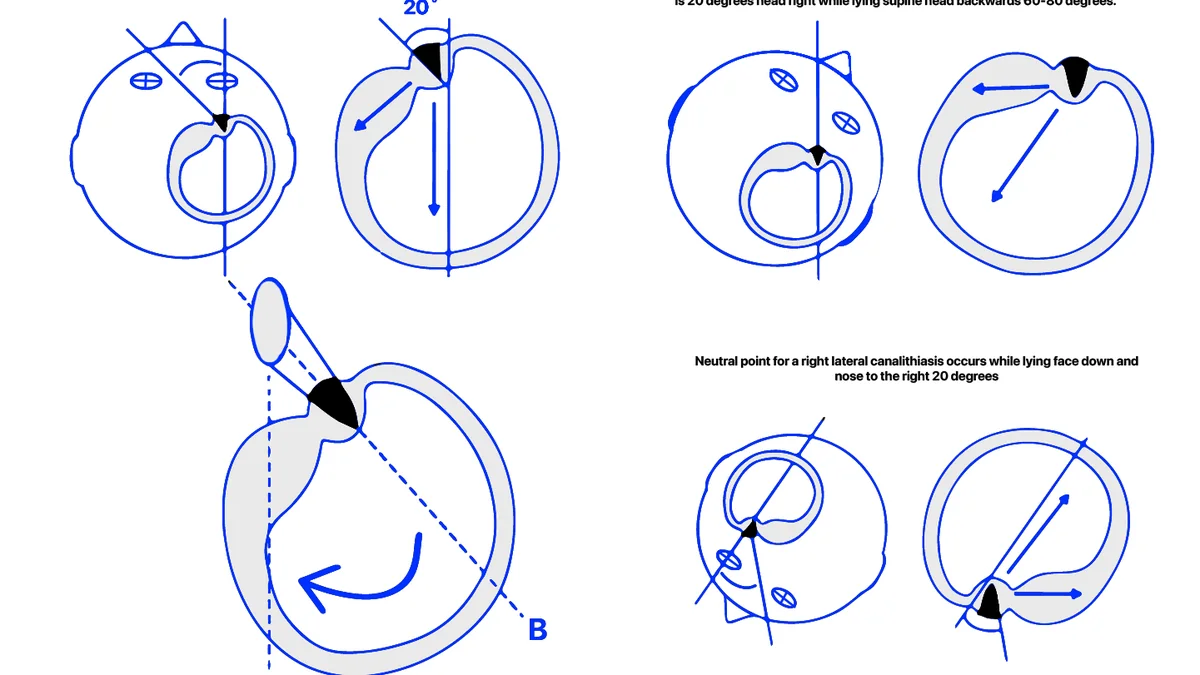
How It Works
Cupulolithiasis involves the dislodging of otolith crystals from the utricle, which then adhere to the cupula of the semicircular canals in the inner ear. This abnormal adherence causes the inner ear to send false signals to the brain about your body's position, leading to dizziness and vertigo.
Symptoms
- Dizziness
- A sense that you or your surroundings are spinning or moving (vertigo)
- A loss of balance or unsteadiness
- Nausea
- Vomiting
These symptoms can vary in intensity and usually last less than one minute. Episodes can disappear for some time and then recur.
Causes and risk factors
While the exact cause of cupulolithiasis is often unknown, it can result from:
- A minor to severe blow to the head
- Degeneration of the vestibular system in the inner ear, often related to aging
- Infections of the inner ear
- Disorders that damage your inner ear
Risk factors include:
- Age (50 and older)
- Previous head injury
- Osteoporosis
- Migraine headaches
Diagnosis
Cupulolithiasis is diagnosed through a series of tests that may include:
- The Dix-Hallpike test
- The Roll test
- Imaging tests to rule out other causes
Treatment
Treatment for cupulolithiasis is straightforward and usually effective. It includes:
- Epley Maneuver (Canalith Repositioning Procedure)
- Semont Maneuver
- Brandt-Daroff Exercises
In some cases, surgery may be considered if these maneuvers do not alleviate the vertigo.
Living with Cupulolithiasis
While cupulolithiasis can be a recurring condition, it's generally considered not serious and can be managed with treatment. Modifications at home and work, along with careful attention to head movements, can help minimize the impact of cupulolithiasis on daily life.
Testing that can help
Testing is chosen from your history and examination. These are the tests most often used here.
Related topics
When to seek urgent care
Call 911 or go to the nearest emergency department if dizziness or imbalance starts suddenly together with any of the following, since these can be signs of a stroke or another emergency:
- Weakness or numbness of the face, arm, or leg, especially on one side
- Trouble speaking or understanding speech
- Double vision or sudden loss of vision
- A sudden, severe headache
- Inability to walk or stand
- Chest pain, fainting, or a seizure
Further reading
- Benign paroxysmal positional vertigo (BPPV)Vestibular Disorders Association
- Benign positional vertigoMedlinePlus
This article is for general education and does not replace a medical evaluation. Testing and treatment are chosen for each patient after a full history and examination.